Physical Address
34 Ire-Akari Estate Road, Isaga Tedo, Lagos, Nigeria
Physical Address
34 Ire-Akari Estate Road, Isaga Tedo, Lagos, Nigeria

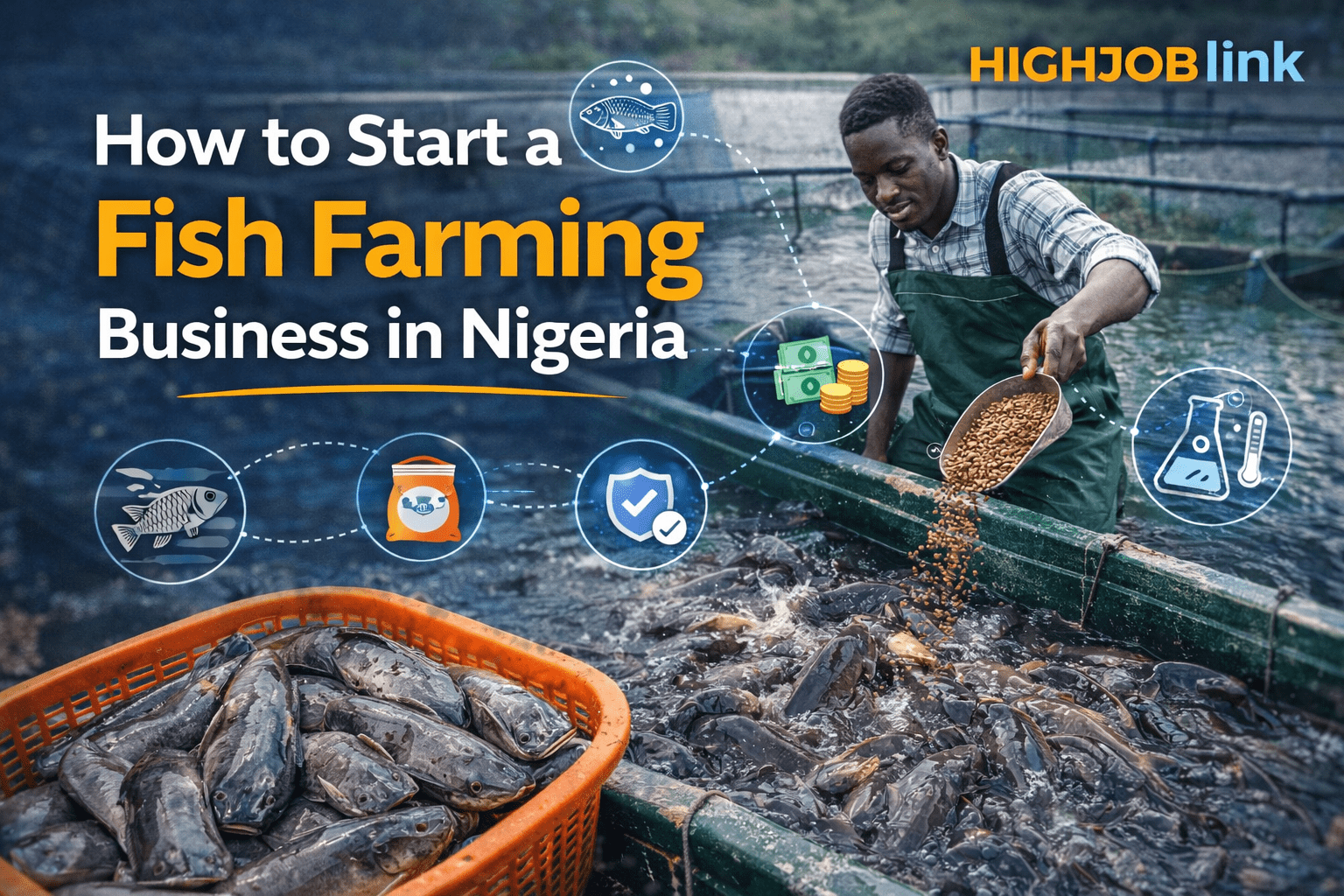
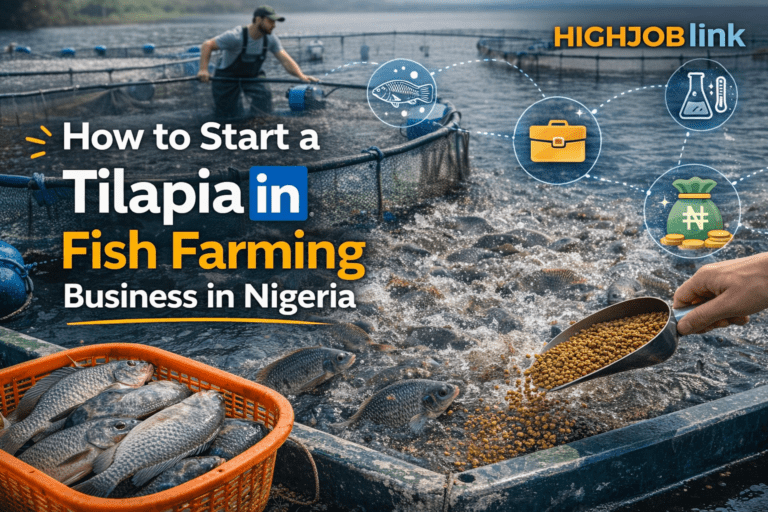
Are you a lover of fish, or are you a person who is interested in the fish farming business? Maybe you are currently unemployed, or you just need a side hustle to make extra cash. If so, fish farming might just be your calling. Compared to other fields of animal farming, fish farming is leaving the field of agriculture like wildfire. You might not even have to quit your current position to start a business.
How do I know? Because I have been doing this fish farming business for over 10 years now, despite running a recruitment agency. I initially did not start with a lot of money because, due to the Nigerian economy, there was not even enough money. I thought of what I love and could do with average capital at the same time, and guess what? Fish farming came up.
I will assist you in starting by tutoring you on licensing, choosing the right location, and the viability of the fish farming business. But before we proceed, let us answer a few basic questions on the fish farming sector:
The fish farming business, or Aquaculture as it is called, is the branch of agriculture in which fish and other aquatic life are reared, raised, harvested, and packaged for consumption or sale.
Yes, you will agree with me that Fish as a food is popular in Nigeria, and we can also agree that almost everyone loves fish as it is healthy and rich in protein nutrients. Between 2014 and 2020, the average annual per capita consumption of seafood worldwide was 20.5 kilograms. In Nigeria, the annual fish consumption per capita is 13 kg.
This is even higher if you were to relate this to the entire West Africa or the average consumption per capita for Africa as a whole. Nigeria only continues to increase with an appetite for 3.6 million tons of fish annually. However, it is quite unfortunate that we only seem to be able to produce 1.1 million tons for now.
Yes, the fish farming sector has been tested and is trusted by me. I have seen and indeed tasted that this sector is lucrative. However, just like every business, to be successful in this sector, you must be determined and have the right strategies.
In Nigeria, the fish farming business can be profitable given the right conditions. With diligence, you can be sure of a gross profit margin of 30%.
For a fish farm business in Nigeria, considering the inflation rate, I would suggest a minimum initial investment of between N300,000 to N2,000,000 for a small or medium-scale fish farm.
Here are the major steps you need to take before embarking on this business.
Life has taught us that no one knows what the future holds, but the least we can do to succeed is to plan for our future. This also applies to the fish farming business. I can tell you from personal experience that many uncertainties await you as a new business owner.
Writing a business plan should never be overlooked. It involves sound study, setting goals and objectives, and adequate market research. I usually advise new or old business owners to write the different sections first and then treat each section one after the other until they reach the summary:
A well-documented business plan can give you access to loans and other financial support, both from the government and investors. In writing a fish farming business plan, the following information needs to be documented;
By now, I expect you to have come up with a good business name. The next step is to register your business name. Business Structures are the first step to consider if you’re registering your fish business name. You are supposed to register your business with the Corporate Affairs Commission, which is the agency in charge of business registration in Nigeria. Remember to choose the right business structure because your business structure determines how much you pay in taxes, the paperwork requirements for your business, and the obligations of your business.
The importance of training cannot be overemphasized. Especially in the Fish farming business, little knowledge is not enough in this sector. Training ensures that you can increase consistency, have improved skill sets, increase productivity, and you can build customer satisfaction. I am not talking about attending one-day seminars. You need to have vast knowledge of fish medication, identifying healthy fish, and containing disease outbreaks.
Before you start any business, I always tell people that the best way to learn fish farming business is through apprenticeship, that is, learning under a practicing expert. Thanks to YouTube, learning any new is no longer as complex as it used to be. Also, accessing YouTube is free.
You need a good location for any business. The good thing about fish is that they are not like other animals we rear; they do not disturb, they do not shout or make noise, and most importantly, fish do not cause any environmental mess. Even the back of your house can be a good choice for setting up a pond.
All you have to watch out for is the availability of water. Your primary asset in the fish-farming business is water. I will advise you to drill a borehole and an overhead tank to supply water to the fish. However, depending on the size of the fish farm you wish to operate, it is best to buy or rent land. There are three common types of ponds, and they are,
The joy of every fish business owner is the continuous growth of large and healthy fish, but to maximize profit, the best practice and advice I’ll give you is that you just have to rear each fish from the fingerling stage to the mature stage. A fingerling or a juvenile is what we call a baby fish.
One characteristic of any living thing, according to science, is feeding and Nutrition. If a living thing does not eat, it dies. Guess what? Fish also eat and feed. The richer the feed, the healthier they grow and the bigger they turn up. You have to give them good supplementary fish feed. These foods are Natural fish feed, supplementary fish feed, and Complete feed.
Marketing is important in any business. If people don’t know what you sell, how will they know to patronize you? I will advise you to create good social media pages and handles. You should create a Facebook Business Page and a Twitter business handle, as well as a business website. Business-to-business advertising should also be considered. That way, you make every supermarket and restaurant that needs fish aware that you can serve as a better option.