Physical Address
34 Ire-Akari Estate Road, Isaga Tedo, Lagos, Nigeria
Physical Address
34 Ire-Akari Estate Road, Isaga Tedo, Lagos, Nigeria

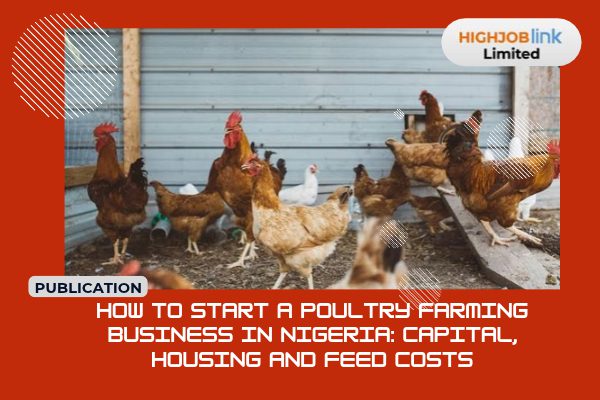
Learn how to start a poultry farm in Nigeria, with realistic capital, housing and feed costs and risks clearly explained.
Poultry is one of the most accessible farm businesses in Nigeria, and one of the easiest to get wrong. Nigeria is estimated to have around 640 million birds, according to a HighJobLink research on Newcastle disease, so demand for eggs and chicken is real and the market is crowded. What separates farms that last from farms that close is rarely the birds themselves. It is the budget: how much you spend before your first sale, how your housing protects your stock, and how feed costs behave month to month. In early November 2026, farmers in several states told reporters that feed prices were still climbing and that some were selling at a loss.
This guide gives you current price points, a worked example for a first flock and the mistakes to avoid, so you can plan with open eyes. Every figure is a planning range. Confirm with your hatchery and feed supplier before you pay anyone.
Broilers are raised for meat and are usually ready in six to eight weeks. Cash comes back quickly, but you must restock and find buyers repeatedly, and every extra day a bird stays unsold costs you feed money. Layers are raised for eggs and typically begin laying at around 18 to 20 weeks, so you carry feed costs for months before income starts. After that, eggs bring steady daily cash. Cockerels and dual purpose breeds such as Noiler and Kuroiler sit in between. They grow more slowly but are generally hardier.
Most beginners do best starting small, with 50 to 100 broilers, to learn feeding, heat control and selling before scaling. If you are still choosing a venture, our list of small business ideas in Nigeria and the guide to starting a business at home will help you compare options. Livestock farming also has a very different cost profile from our guides to starting a fish farming business and tilapia farming.
HighJobLink went round Lagos and interviewed poultry farmers and we confirmed that 2026 start-up ranges and has been rising sharply with scale:
| Scale | Typical flock | Reported start-up range |
|---|---|---|
| Micro farm | 50 to 100 birds | From about ₦350,000 |
| Small commercial farm | 500 birds | ₦3.5 million to ₦4.5 million |
| Large farm | 5,000 birds or more | Above ₦45 million |
Other guides quote lower totals, mainly because they assume cheaper chicks, an existing building or older feed prices. Your own total depends on four things: whether you already own land, whether you build or convert a structure, which breed you buy, and how many weeks of feed you can afford before income arrives. Add a cash buffer for at least one bad cycle. Farmers in the same reports note that chick prices tend to jump around Sallah, Easter and Christmas.
For current chick prices, farmers in Kogi told Vanguard that a day-old broiler chick cost about ₦2,200 and a layer chick about ₦3,500. Write your business plan on today’s quotes, not on figures you saw a year ago. Our guide to writing a business plan shows how to structure the numbers.
Good housing protects against heat, damp, predators and disease, and it is cheaper to build properly once than to repair later. We could not find a reliable current Nigerian figure for housing cost per bird, so get at least two written quotes from local builders.
Space. Overcrowding raises heat, ammonia and disease. An agricultural engineering standard published through the University of the Philippines Los Baños recommends about 12.5 square metres per 100 broilers once they pass four weeks, and about 6.25 square metres per 100 younger birds. For layers on deep litter, Indian veterinary guidance puts the figure at about 1.5 square feet per hen after 18 weeks, which works out to roughly 14 square metres per 100 hens.
Design. An open-sided house with a solid low wall, a good roof and cross ventilation suits most Nigerian climates. Keep a separate warm brooding area for chicks, and use dry litter about 5 to 10 centimetres deep. Heat is a real concern: a study by researchers at Osun State University in humid south-west Nigeria found that warm, ammonia-heavy litter caused discomfort in broilers, which is why airflow and litter management matter.
Location. Choose a site away from homes, with a dependable water supply, road access and a plan for electricity or solar power, since unreliable power is a common cause of chick deaths. Our guide to choosing the right business location covers the questions to ask, and you should check local planning and environmental rules with your local government before building.
Farmers consistently put feed at about 70 per cent of production cost, and the current numbers show why. Reports from early November 2026 give these price points per 25 kg bag:
Maize and soybean prices are the main drivers, along with transport and diesel costs. You cannot control those, but you can control waste and buying habits. Buy from reputable mills, store bags dry and off the floor, join other farmers to buy in bulk, and record feed used per bird so you notice problems early. Do not mix your own feed unless a qualified animal nutritionist formulates it.
This is an illustration, not a promise. It assumes 100 chicks, a six to seven week cycle, 5 per cent loss, about 3.5 to 4 kg of feed per bird, and a finished weight near 2 kg. Check your breed’s performance guide for exact feed figures.
| Item | Estimated cost or income |
|---|---|
| Day-old chicks (100 at ₦1,700 to ₦2,200) | ₦170,000 to ₦220,000 |
| Feed (about 15 bags at ₦20,000 to ₦24,000) | ₦300,000 to ₦360,000 |
| Vaccines, medicine, vitamins (budget estimate) | ₦30,000 to ₦60,000 |
| Litter, heating, water, labour (budget estimate) | ₦40,000 to ₦80,000 |
| Running cost for the cycle | ₦540,000 to ₦720,000 |
| Revenue: 95 birds at 2 kg and ₦4,500 to ₦5,000 per kg | ₦855,000 to ₦950,000 |
On these assumptions, the profit before housing could sit anywhere from about ₦135,000 to ₦410,000, and a small drop in selling price or a spike in deaths can wipe out much of it. Farmers quoted in the Vanguard report put broiler prices at ₦4,500 to ₦5,000 per kilogramme, with eggs at ₦6,000 to ₦6,500 per crate in some markets. A HighJobLink survey found crates between ₦5,700 and ₦6,500 in Lagos, with big differences across states. Build your plan around the lower end of selling prices.
Disease is the fastest way to lose a flock. The Federal Ministry of Livestock Development described Newcastle disease as one of the most damaging viral diseases of Nigerian poultry when it inaugurated a national technical working group in August 2026. Work with a licensed veterinarian from day one, who can set a vaccination and treatment programme that fits your breed and location.
Bird flu is different. Nigeria’s government policy is not to vaccinate against highly pathogenic avian influenza, so farmers rely on biosecurity and quick reporting. The ministry and FAO also launched a project in 2026 to strengthen detection and response. In practice, that means limiting visitors, using a footbath at the entrance, keeping new and old stock apart, disposing of dead birds properly and reporting unusual deaths to your state veterinary office rather than selling sick birds.
Selling to hotels, supermarkets and caterers usually requires a registered business. Register with the CAC, using our guide to registering a business with the CAC, and read about your tax obligations as a small business before your first big sale. Choosing the right business name and structure early saves trouble later, and business insurance is worth pricing because one outbreak or fire can end a young farm. For wider support, SMEDAN publishes programmes for small enterprises.
Starting with a flock you cannot feed. Budget feed for the whole cycle, not just the first week.
Buying cheap, untested chicks. Buy from reputable hatcheries, and ask about breed, vaccination history and mortality.
Overstocking the house. Extra birds mean more heat and disease, and slower growth.
Skipping the vet. A cheap vaccination plan costs far less than a dead flock.
Having no buyers lined up. Agree on customers, prices and pick-up days before the birds are ready.
Ignoring records. Track chicks bought, feed used, deaths, sales and expenses for each batch, so you know whether you are really making money.
Poultry can pay, but only for owners who plan around feed, protect their flock and sell steadily. Start with a small flock you can afford to lose, learn the routine, then grow with the profits. Keep a separate account for the farm, keep every receipt and revisit your numbers every cycle.