Physical Address
34 Ire-Akari Estate Road, Isaga Tedo, Lagos, Nigeria
Physical Address
34 Ire-Akari Estate Road, Isaga Tedo, Lagos, Nigeria

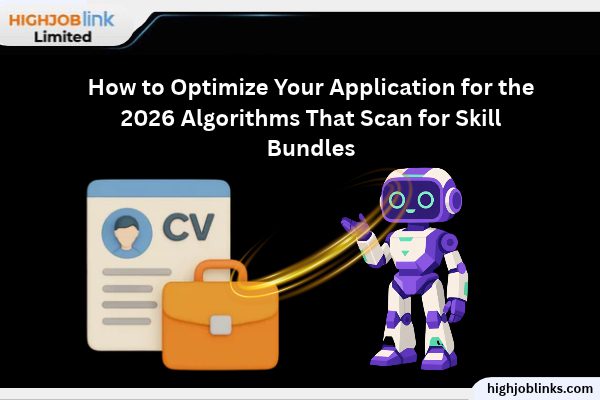
Recruiters now search by groups of related skills, not job titles. Here is how to shape your application so it gets found.
A few years ago, most job seekers worried about one thing: did my CV contain the right keywords? In 2026, that question is too small. Hiring software and recruiter search tools increasingly look at groups of related abilities, often called skill bundles, and they judge how well your whole profile fits a role. If your application reads like a random list of tools and buzzwords, it can slip past the very people you want to reach.
This guide explains what skill bundles are, why employers lean on them, and how to shape your CV, cover letter and online profile so they are easy for both software and humans to understand. It is written for job seekers in Nigeria and beyond who want practical steps, not hype.
A skill bundle is a cluster of abilities that tend to appear together in a particular kind of work. A digital marketer, for example, is rarely hired for “SEO” alone. The role usually combines search optimization, analytics, content planning, and some basic reporting. An accounts officer is expected to bring bookkeeping, reconciliation, spreadsheet fluency and knowledge of tax obligations. When a system sees several of those related skills in one profile, it treats you as a stronger match than someone who mentions only one of them.
This shift reflects how employers talk about work. LinkedIn’s Skills on the Rise 2026 report groups fast-growing abilities into clusters, including AI and automation, data and analytics, IT and cybersecurity, business and growth, and people and leadership. The message for you is simple. Employers are no longer hiring only for a title. They are hiring for a combination of capabilities.
The same LinkedIn research reports that about 46 percent of recruiters globally now use skills data to fill roles. That is close to half of the people screening candidates. Many of them search by skill first and job title second, which means a person with an unusual career path can still surface if the right skills are visible.
This is good news if you are changing careers, returning to work after a break, or came up through informal training rather than a traditional route. It is bad news if your CV hides what you can do behind vague job titles. Software cannot guess that “Operations Assistant” at a small firm meant you managed inventory, negotiated with suppliers and trained two new hires. You have to say so clearly.
If you want a refresher on how screening software reads documents, our guide on how applicant tracking systems read your CV is a useful companion to this article.
Start with a plain document, not your CV. List every task you have done in the last five years, paid or unpaid. Next to each task, write the skill it required. Be specific. “Handled customer complaints” becomes complaint resolution, CRM updates and written communication. “Ran the shop’s social media” becomes content planning, audience analytics and basic graphic design.
Then group those skills into natural clusters. You might find three or four bundles you already own, such as customer support, data entry and reporting, or sales and relationship management. This exercise matters because it shows you which bundles you can honestly claim and which ones you only touched briefly. Honesty here protects you later, because interviewers will test anything you list.
Open the advert and highlight every skill, tool and responsibility. You will usually notice that the same ideas repeat in different words. A post that mentions reporting, dashboards, and data accuracy is describing one bundle, which is data analysis, even if the words “data analysis” never appear.
Sort the highlighted terms into three groups. The first group is core requirements, meaning what the role cannot function without. The second is supporting skills that make you more attractive. The third is nice-to-have extras. Your application should show the first group strongly, the second group clearly, and the third only if it is true and relevant. Do not copy an entire advert into your CV. Match its language where it honestly describes what you have done.
Algorithms compare your wording against a library of known skills. If you invent your own phrasing, the match weakens. Use the names employers and databases already use. “Microsoft Excel” is better than “spreadsheet stuff.” “Project management” is better than “keeping things on track.”
Two free references can help you pick standard terms. The US Department of Labor’s O*NET OnLine lists the knowledge, skills and tasks attached to thousands of occupations. The European Commission’s ESCO classification does the same for skills and occupations across Europe. Neither is a Nigerian database, but both are widely used as reference vocabularies, and browsing them for your target role shows you which skills are normally grouped together. You can explore them at O*NET OnLine and ESCO.
Listing a skill is not enough. A bundle becomes believable when your experience shows the skills working together. Compare these two lines.
Weak: “Responsible for social media and reports.”
Stronger: “Planned and published weekly content for three channels, tracked engagement in Google Analytics, and presented monthly performance reports to the managing director.”
The second line contains content planning, analytics and reporting in one sentence, and it shows an outcome a reader can picture. Where you can, add a number you can defend, such as how many clients you handled, how much time you saved, or how many people you trained. If you cannot measure something, describe the scope instead. Never invent figures. Employers check, and a single false claim can end an otherwise strong application.
For help turning duties into achievements, see our post on writing CV bullet points that get interviews.
Clever design often hurts you. Many parsing tools struggle with tables, text boxes, icons, skill bars and two-column layouts. A clean, single-column document with standard headings is safer. Use headings such as Professional Summary, Skills, Work Experience, Education and Certifications, because software expects them.
Place a short, focused Skills section near the top, grouped by bundle. For example, you might write “Data and Reporting” followed by Excel, Power BI, data cleaning and dashboard design. Then repeat those same skills naturally inside your work experience, where they are backed by real tasks. This double placement helps systems connect the skill name to proof of use.
Save your file in the format the employer asks for. If no format is stated, a standard Word document or a text-based PDF is usually safe. Avoid sending a scanned image of a CV, because the text inside it cannot be read as text.
Recruiters rarely look at your CV in isolation. They often search professional networks first, so your profile and your CV should tell the same story. Fill in the skills section on your LinkedIn profile, put your strongest bundles at the top, and make sure job titles, dates and employers match your CV exactly. Ask former colleagues or supervisors to endorse the skills you actually used with them, since a skill backed by other people carries more weight than one you added yourself.
If you are applying for jobs that involve remote or international teams, consistency matters even more, because recruiters in other countries cannot call someone down the road to check you out. Our guide to building a LinkedIn profile that recruiters find walks through this in detail.
A cover letter is your chance to explain the link between your skills in plain language. Pick the one bundle that matters most for the role and tell a short story about using it. Two or three focused paragraphs beat a page of general praise for yourself. Mention the employer by name, refer to something specific in the advert, and finish with a clear statement of what you can do for them in the first few months.
Keyword stuffing is the most common problem. Repeating the same term twenty times, or hiding invisible white text in the margins, can get an application flagged and rejected. Modern systems and recruiters both spot this quickly.
Another mistake is listing skills you cannot defend. If you write “advanced Excel” and then cannot explain a lookup formula, the interview becomes awkward. List what you can demonstrate, and be honest about your level.
A third mistake is sending the same CV everywhere. A tailored version for each application takes twenty extra minutes and usually performs far better than a generic file sent to fifty employers.
Finally, many people forget soft skills. LinkedIn’s research points out that human skills such as communication, collaboration and leadership are still in demand alongside technical abilities. Show them through examples, such as leading a small team or resolving a conflict with a client, rather than by writing “good communicator.”
Many Nigerian applicants compete for roles with employers who receive hundreds of applications within days. In that environment, being easy to find matters. Make sure your phone number and email address are correct, your CV has no layout surprises, and your certifications are named exactly as the issuing body names them. If you completed training through a recognized institution or an online programme, state the provider and the year. Be careful with any recruiter who asks for payment to “boost” your application, since legitimate employers do not charge candidates for screening.
Confirm that you have matched at least the core skills in the advert, grouped your skills into clear bundles, backed each bundle with a real example, used standard skill names, kept the layout simple, and aligned your online profile with your CV. If you can tick all of those, you have done what anyone reasonably can to prepare for a skills-focused search.
Skill bundles are not a trick. They are a more accurate way of describing what employers have always wanted, which is a person who can do the whole job, not just one part of it. The candidates who benefit most are the ones who understand their own strengths, describe them in clear and standard language, and support them with honest evidence. Start with your skills inventory this week, and apply the steps above to your next application. You will likely notice the difference in the quality of responses you receive.