Wage Growth vs Inflation: When Will Real Wages Recover?

When analyzing wage growth vs inflation, it becomes painfully obvious that our purchasing power has taken a massive hit over the last few years. I have spent a significant amount of time recently digging into the latest economic reports, reviewing updates from the Bureau of Labor Statistics, and looking closely at central bank projections to understand when this financial squeeze will finally ease. What I found shows that we are living through a unique economic transition. This is not just a temporary mismatch between prices and salaries; it is a fundamental restructuring of our economic reality that requires a smart strategy to navigate.

The Root of the Squeeze: Why Your Paycheck Feels Lighter

It is no secret that I have been deeply concerned about how working professionals are managing to stay afloat in this high-cost environment. When we talk about the relationship between what we earn and what we spend, the massive gap between pay bumps and price increases is the main challenge that keeps household budgets under constant pressure. To truly understand why your money is losing its muscle, we have to look at the specific economic forces driving this imbalances.

1. The Post-Pandemic Supply Shock and Core Price Triggers

In my regular conversations with business owners and financial analysts, the word “overhead” comes up far more often than “expansion.” The global economy went through an unprecedented disruption a few years ago, and we are still dealing with the aftershocks. Supply chains were tangled, energy markets experienced extreme volatility, and manufacturing costs spiked.

While some of those initial logistical bottlenecks have cleared up, companies have permanently adjusted their pricing models. When a business experiences higher input costs, they do not just absorb the loss. They pass those expenses down to you and me. This sticky pricing environment is a primary reason why everyday items remain expensive, completely overshadowing the modest salary increases that employers have offered.

2. Corporate Pricing Strategies and Profit Margins

I see corporate margin protection as a massive, often under-discussed driver of our current predicament. During the initial wave of high price increases, many large corporations realized that consumers were becoming accustomed to paying more for goods and services. Even as wholesale costs started to stabilize, many companies maintained their elevated prices to protect or expand their profit margins.

This means that while the broader economic indicators show a cooling of price growth, the retail prices we encounter every single day remain stubbornly high. This reality makes it incredibly difficult for standard salary updates to bridge the gap effectively.

3. The Structural Shift in Global Labor Demographics

We also need to talk about the deeper demographic changes happening within the global workforce. In many advanced economies, experienced workers are retiring at a rapid pace, creating a significant knowledge and talent gap in specialized fields. You might assume that a shortage of workers would naturally force companies to offer massive pay raises, which would instantly solve the issue.

However, the reality is far more complex. Instead of raising base salaries across the board, many organizations are investing heavily in automation, software tools, and operational efficiencies to get by with smaller teams. This corporate hesitation to permanently commit to higher payrolls has created a challenging situation where employment rates look stable, but actual salary improvements remain capped.

Tracking the Numbers: Wage Growth vs Inflation

To get a crystal-clear picture of where our finances stand, we need to look at the official economic data side-by-side. Seeing the divergence between nominal earnings and actual living costs highlights exactly why so many people feel like they are running on a financial treadmill that is moving too fast.

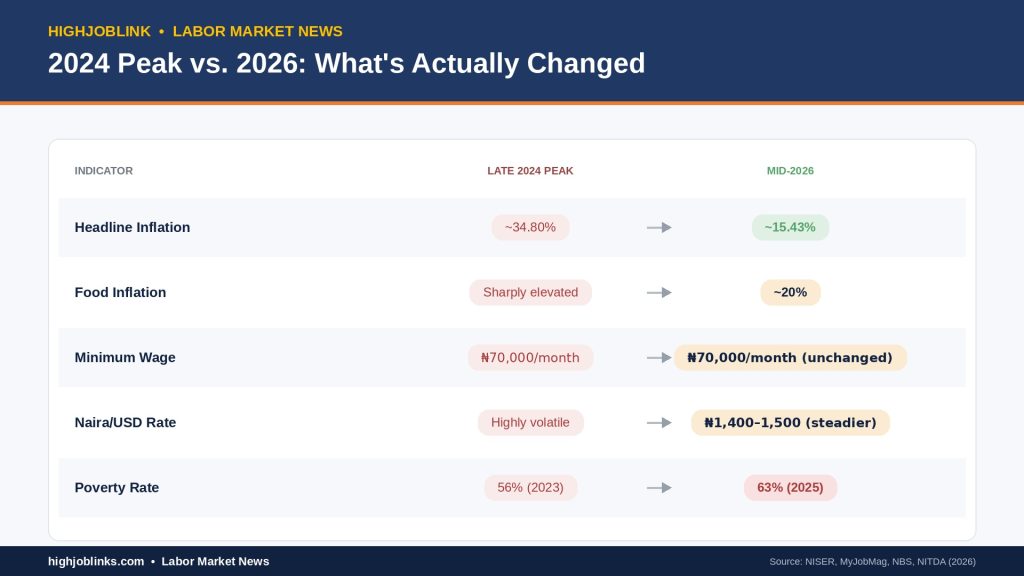
Economic Feature High-Inflation Peak Phase Current Stabilizing Phase
Nominal Pay Growth Spiked by 4.5% to 5.2% Stabilized around 3.5% to 4.0%
Core Living Costs Surged by 7.0% to 9.1% Hovering around 3.0% to 3.5%
Real Purchasing Power Severe negative contraction Flatlining or marginally positive
Primary Corporate Response Rapid consumer price hikes Focus on operational automation
Worker Sentiment High anxiety and job-hopping Priority on job security and stability

When we evaluate the dynamic of wage growth vs inflation through this data, the contrast between our regular earnings and our actual buying power is undeniable. I firmly believe that we are living in an era of structural financial recalibration. In the past, a standard annual raise was enough to improve your lifestyle. Today, a standard raise barely keeps you at the exact same baseline.

The Reality of the Jobs Gap and Missing Purchasing Power

One critical concept I want to emphasize is the real-world impact of missing purchasing power. Even though official statistics might suggest that price pressures are cooling down and salaries are technically rising, millions of people worldwide cannot find roles that truly match their financial needs. In many regions, this gap is felt through underemployment, where skilled professionals are forced to take on multiple lower-paying roles just to cover their basic monthly liabilities.

I recently reviewed a comprehensive labor market report from the Pew Research Center that detailed how financial pressure alters worker behavior. In the current market, if your skill set does not include advanced digital literacy or specialized technical expertise, your ability to negotiate for higher pay is severely limited.

In contrast, during the historic hiring booms of previous years, workers held all the leverage. Today, employers are being far more selective, which keeps a lid on aggressive salary increases and prolongs the time it will take for your true buying power to bounce back.

Why the Recovery of Buying Power is a Slow, Gradual Journey

I do not think we are going to see a sudden, magical return to the cheap living costs or massive payroll bumps of the previous decade. The slow stabilization of your financial strength represents a permanent structural adjustment. Companies have realized that they can maintain high productivity levels with leaner teams by using modern software solutions to fill operational gaps.

As I see it, the focus across the business world has shifted entirely from hiring quickly to optimizing output. This means that instead of seeing widespread, massive pay raises across every industry, we will likely see highly targeted increases reserved only for indispensable roles. This targeted approach leaves a large portion of the workforce waiting much longer for their salaries to catch up with the accumulated price increases of the past few years.

Strategic Moves: How to Protect Your Wallet Today

If you are trying to navigate this tough economic climate, how do you handle the ongoing imbalance of wage growth vs inflation? Here is my personal take on the best path forward to protect your financial future.

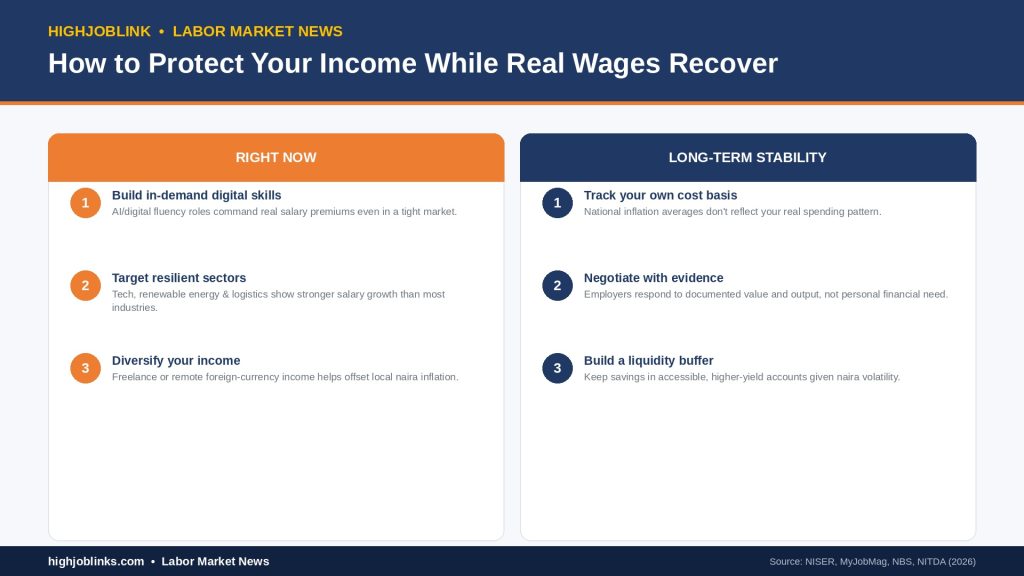
For Professionals Seeking Immediate Financial Relief

  • Prioritize High-Value Upskilling: You do not necessarily need to go back to school for a brand-new degree, but you absolutely must learn how to use modern productivity tools and platforms to double your daily output.

  • Target Resilient Sectors: Industries like renewable energy, specialized medical technology, and essential infrastructure logistics are still actively hiring and offer better salary protection against rising living costs.

  • Diversify Your Revenue Streams: Relying on a single traditional job for your entire livelihood is becoming a risky strategy. Building a secondary income source or taking on project-based freelance assignments can give you the financial safety net you need.

For Long-Term Financial Stability

  • Track Your Personal Inflation Rate: Standard economic indexes are general averages. Take a close look at your own spending habits to see exactly where your money is going, and adjust your budget around your highest real-world costs.

  • Negotiate with Hard Performance Data: When asking for a salary adjustment, avoid making it about your personal bills. Bring clear proof of how much value, efficiency, or revenue you have brought to the organization.

  • Build a Dedicated Liquidity Buffer: Given the unpredictable nature of the modern job market, keeping a portion of your savings in highly accessible, high-yield accounts is essential for peace of mind.

Closing Thoughts: The True Cost of the Economic Shift

At the end of the day, these complex economic figures represent real human experiences. Behind the statistics comparing earnings and living costs are hard-working individuals trying to figure out how to handle their mortgages, support their children, or save for a peaceful retirement. I believe that the future belongs to those who accept that the old economic rules have changed and actively adapt to the new reality.

The ongoing tension between wage growth vs inflation serves as a clear wake-up call for all of us. We are transitioning away from a predictable financial world into an environment that demands constant personal adaptation and strategic planning. It can feel overwhelming and incredibly challenging at times, but it also opens up brand-new pathways to financial independence if you know how to adapt your skills. Stay focused, keep learning, and keep a close eye on your financial horizon.

Updated: May 28, 2026 — 8:30 am

The Author

HighJobLink Limited

HighJobLink Limited is a Lagos-based Nigerian recruitment agency and job search platform founded in 2014. It connects job seekers with employers, providing career guides, job listings, and labor market news. The agency operates as a bridge for recruitment, often featuring job openings and vacancy updates.